
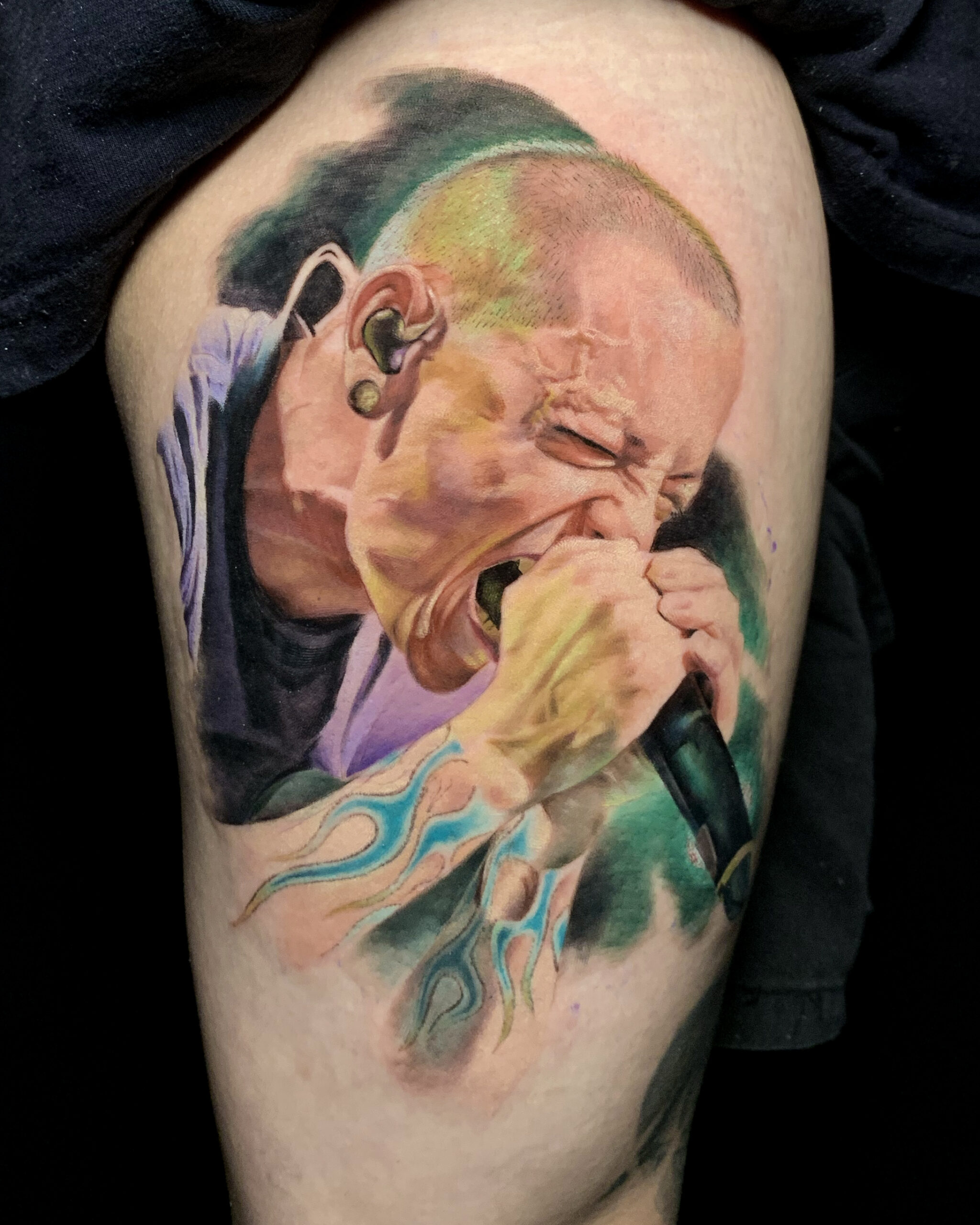
Linkin Park Portrait
The images document the same project, including its healed condition at approximately one year.

Realism Tattoo Studio · Ho Chi Minh City
A compelling portrait tattoo requires more than a close resemblance to the reference photo. Proportion, expression, light and composition must be translated into a piece that belongs naturally on the wearer’s body.
At Realism Tattoo Studio, every portrait project is developed individually by Khang Truong — from selecting the reference, size and placement to controlling color, contrast and long-term readability after healing.
Portrait portfolio
The projects below include Color Realism, Black & Grey, fresh work and healed work. Each status is labeled according to verified project records.
The images document the same project, including its healed condition at approximately one year.
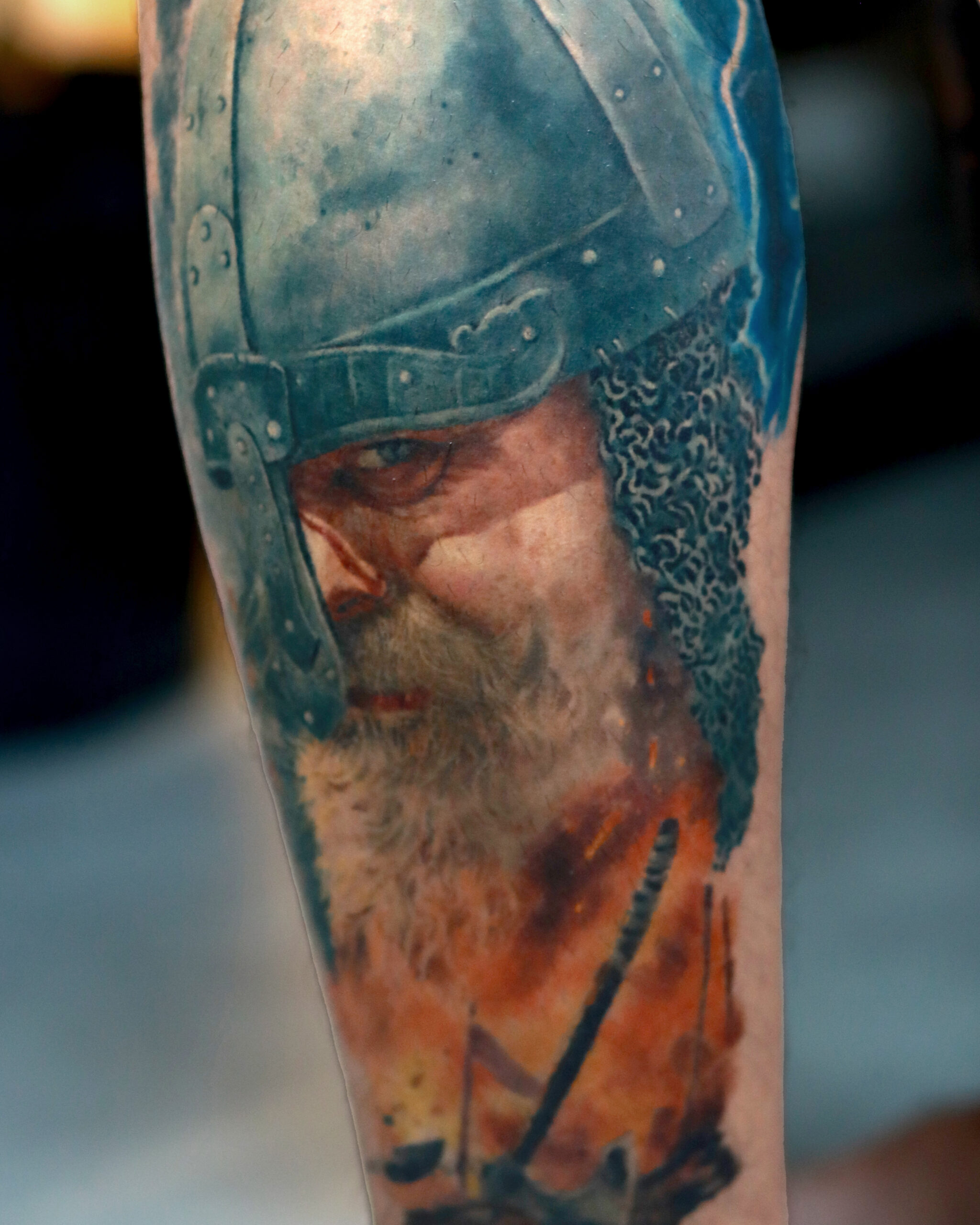
The images document the same project, with a focus on light, contrast and facial depth.

A grandchild portrait created within a chest composition and documented immediately after completion.
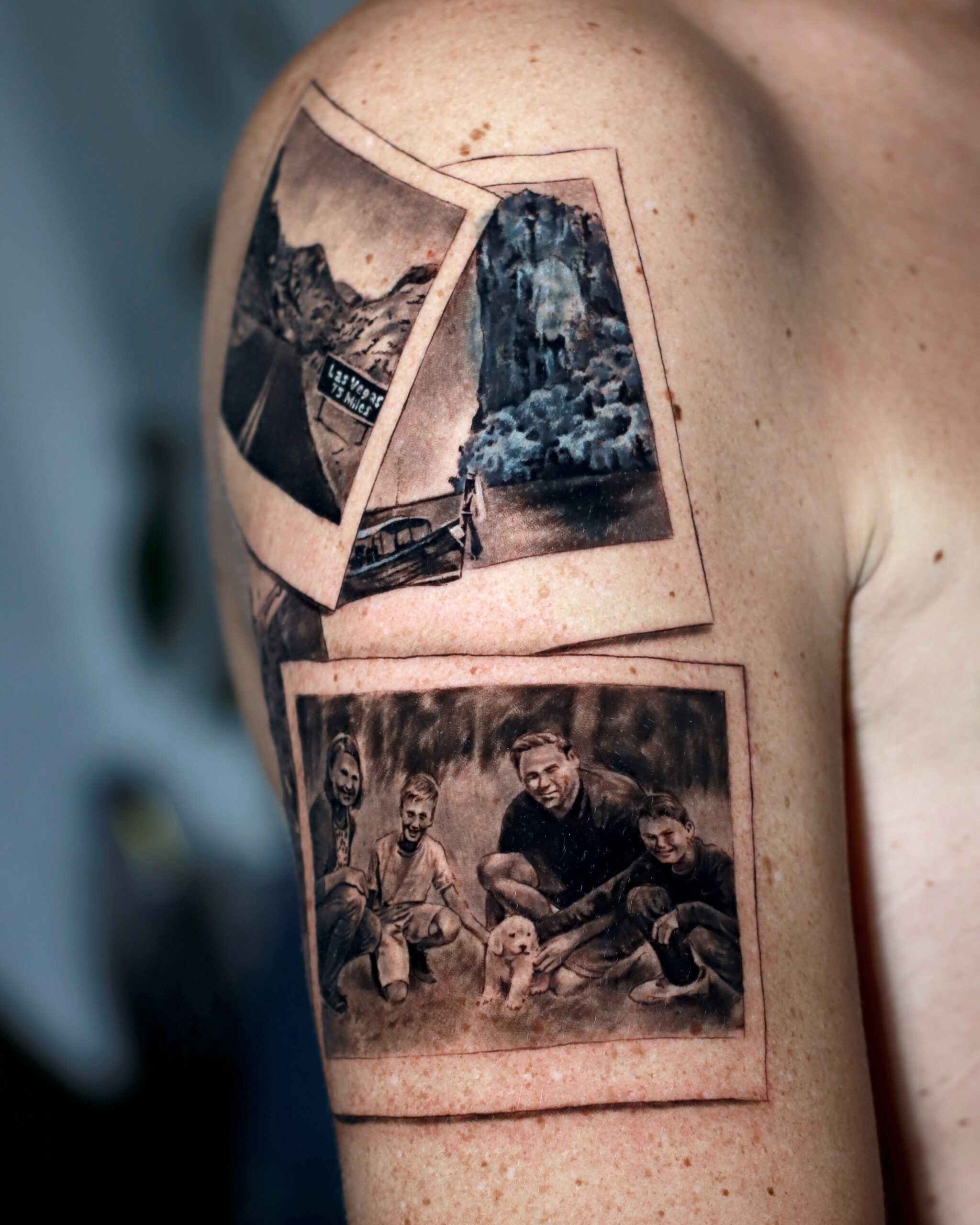
A small-scale family portrait documented immediately after completion.
Portrait technique
A portrait tattoo is not created by simply copying every detail from the original photograph.
Likeness begins with facial structure, proportion, expression and the light-and-shadow patterns that make the subject recognizable.
On skin, the artist must also account for body curvature, movement and how tonal values settle after the tattoo heals.
Essential details must therefore be prioritized. Unnecessary information may be simplified so the portrait remains clear and dimensional over time.
Facial structure, the spacing of features and expression are the foundation of likeness.
Light and shadow are organized to create facial depth and preserve clear recognition after healing.
The design must adapt to curved surfaces and natural movement rather than placing a flat image onto the skin.
Visual direction
Neither approach is inherently better. The direction depends on the reference image, concept and emotion the project needs to convey.
Color can preserve skin tones, atmosphere and important visual relationships from the reference image.
Black & Grey can place greater emphasis on structure, light and tonal depth.
The direction is chosen for each project after the artist reviews the image, placement and aesthetic goal. To explore the broader visual language of this style, visit our Realism tattoo page in Ho Chi Minh City.
Project preparation
A high-quality reference helps the artist assess facial structure, light, expression and how much detail can be translated onto skin.
Scale directly affects readability. When a portrait is reduced too far, some detail must be simplified to keep the overall image clear.
The right placement and size are determined from the individual image and composition rather than a rigid minimum measurement. You can also read 7 Things to Know Before Getting a Realism Portrait Tattoo.
Fresh & healed case study
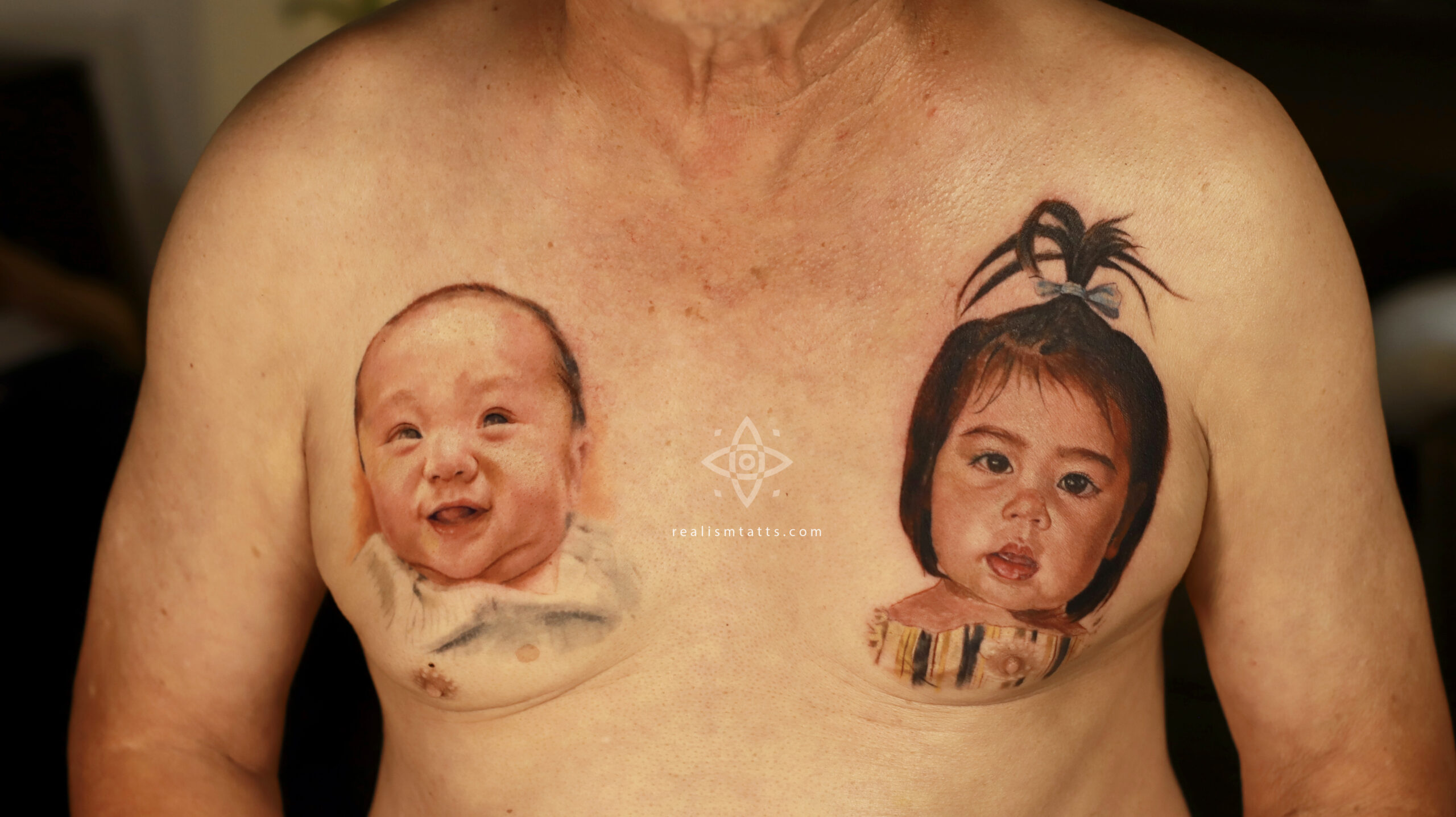
Within the same chest composition, the two baby portraits were created at different times. One side is fresh, while the other portrait has been healed for approximately two years.
Placing the two states side by side offers a direct view of the difference between a newly completed portrait and one that has settled on the skin over time.
In the fresh portrait, color and contrast naturally appear stronger. Hair, eyes and the darker areas of the face are more pronounced immediately after the session.
In the portrait healed for approximately two years, the tones have softened through the skin’s healing process, while facial structure, expression and recognition remain intact.
This is why Realism Tattoo Studio treats healed work as an essential measure of Portrait and Realism quality: not only how powerful a tattoo looks when fresh, but how well its structure, tonal range and readability hold over time.
Supporting cases
Three distinct approaches to likeness, stylized portrait imagery and large-scale Black & Grey work.
The project focuses on likeness, facial structure and the subject’s defining features. Comparing the fresh work with the tattoo healed for approximately one year shows that structure and expression remain clear.
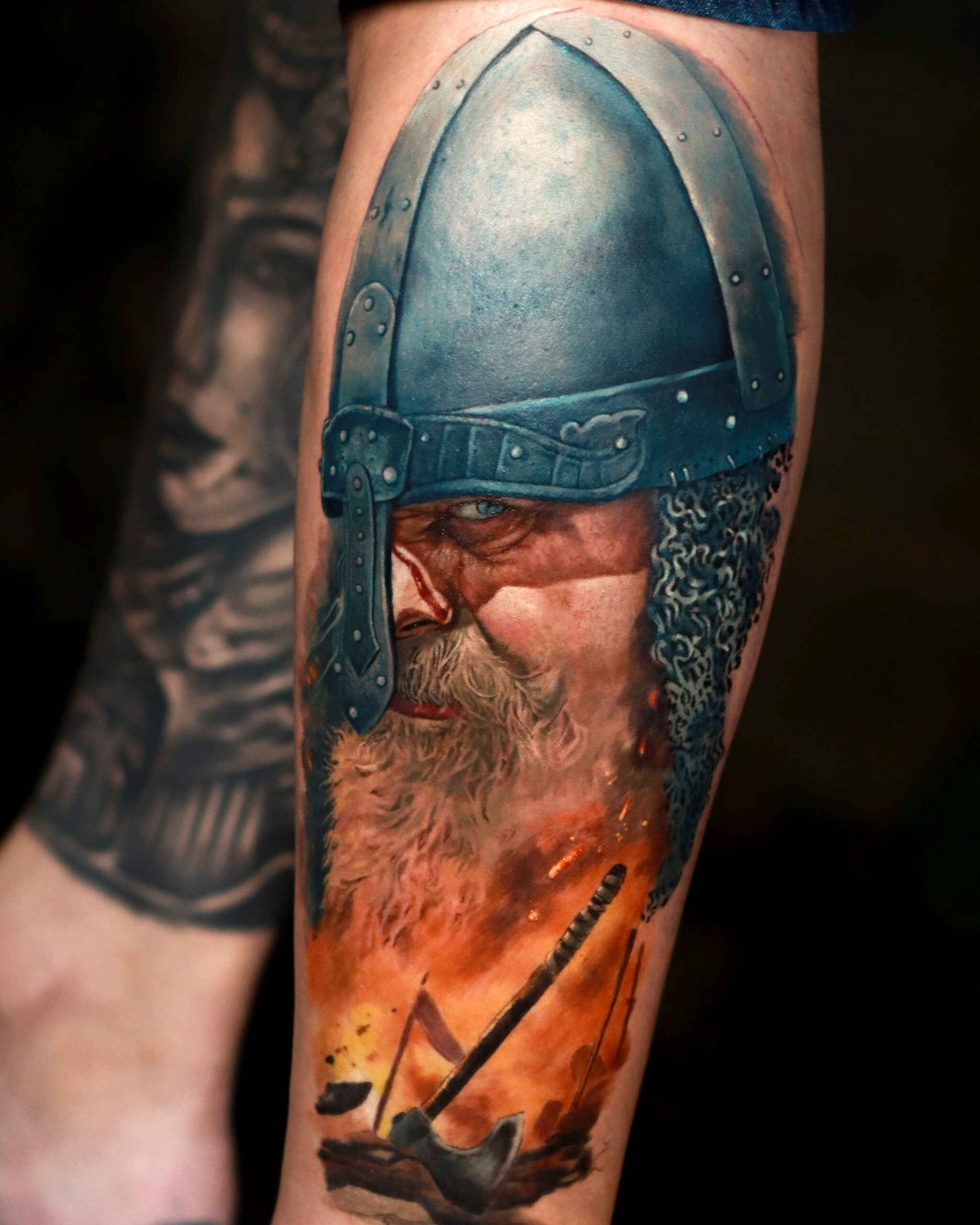
This portrait includes more stylized elements than a conventional likeness piece, requiring careful control of light, contrast and depth so the face remains the focal point.
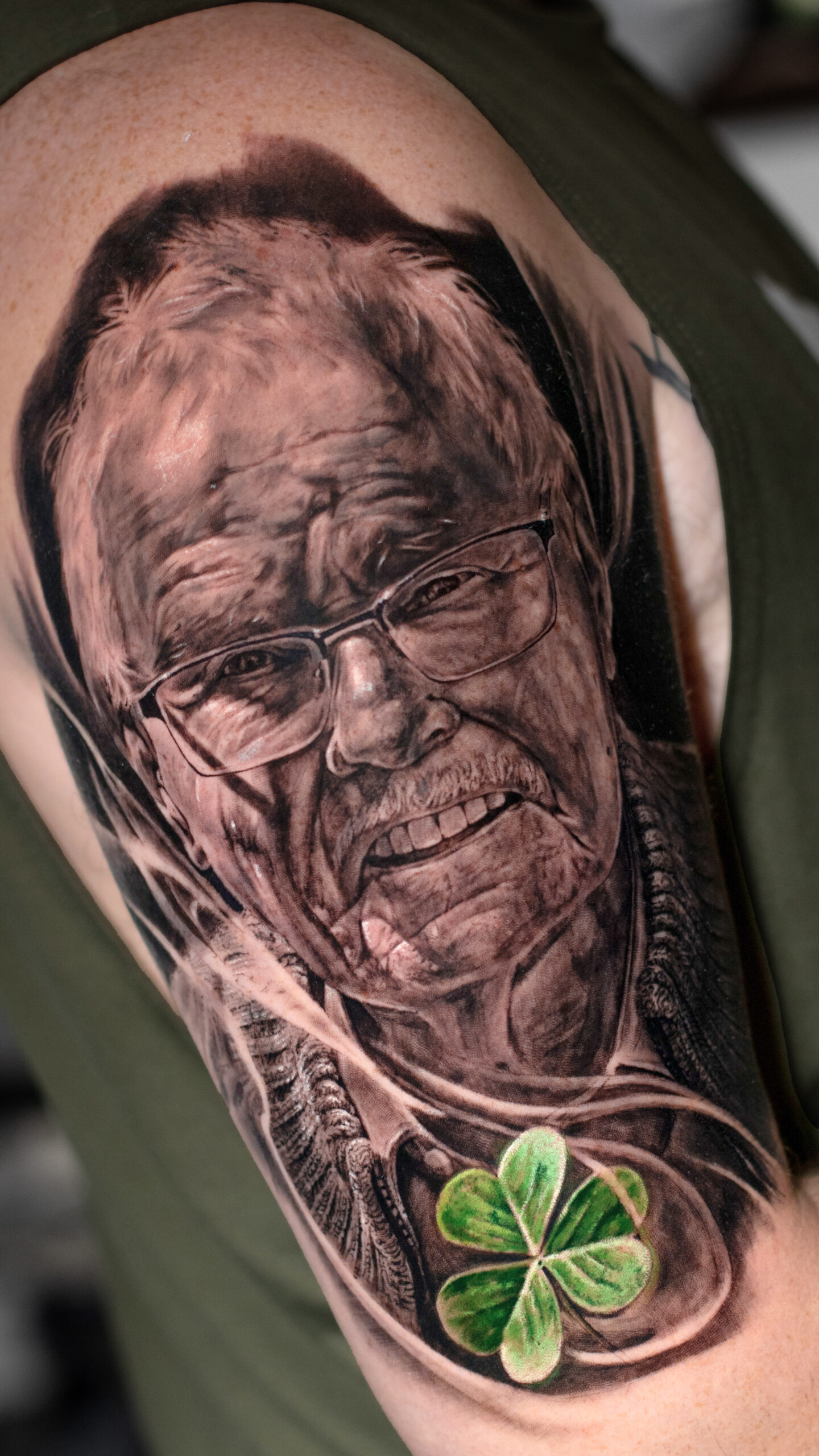
This project focuses on likeness, facial structure and tonal depth. At a larger scale, fine details in the skin, hair, glasses and wrinkles can be retained more clearly, while contrast is controlled so the portrait remains powerful and dimensional on the body.
Session planning
A portrait project at Realism Tattoo Studio usually requires approximately 1–2 sessions, depending on size, detail, placement, number of subjects, Color versus Black & Grey, and overall complexity.
The number of people or subjects in the composition affects the work required.
Color or Black & Grey, together with placement, affects the session plan.
The level of detail and overall structure determine how the work is divided across sessions.
Session count can only be estimated after the studio reviews the reference photo, placement and project scale; an exact number cannot be promised before consultation.
Artist
Khang Truong specializes in Realism, Portrait Tattoo and custom compositions designed for each body. Evaluation extends beyond fresh work to healed results, showing how structure, tonal values and readability hold over time.
From reference to appointment
FAQ
It can be assessed, but usability depends on facial clarity, lighting and how much information remains in the image. The studio will review the reference before recommending an approach.
Yes, but the composition must be rebuilt so the proportions, gaze direction and lighting of each person work together and suit the placement.
Most portrait projects require approximately 1–2 sessions, depending on size, detail, placement, number of subjects, Color versus Black & Grey, and overall complexity. Large or multi-subject projects may require a different plan.
Pricing depends on size, placement, design complexity and the number of sessions required. The studio needs to review the reference image and project requirements before providing a price range.
A tattoo needs time to recover before color, tonal values and the skin surface can be assessed accurately. For long-term healed work, the studio prioritizes pieces that have settled long enough to show clearly how the design holds on skin.
Realism Tattoo Studio
If you have a photograph you would like to transform into a portrait tattoo, send Realism Tattoo Studio the reference image, intended placement, approximate size and the idea or story behind it.
The studio will assess feasibility and recommend an appropriate design direction before the project begins.


