
Large-Scale Arm Composition
The woman portrait, skull, and fire are arranged in layered visual planes, creating movement along the arm while maintaining a clear focal point.

Realism Tattoo Studio · Ho Chi Minh City
From full sleeve and full leg tattoos to full back pieces, every large-scale project needs to be developed as a complete composition for the body—with clear focal points, visual flow, and a structured plan across multiple sessions.
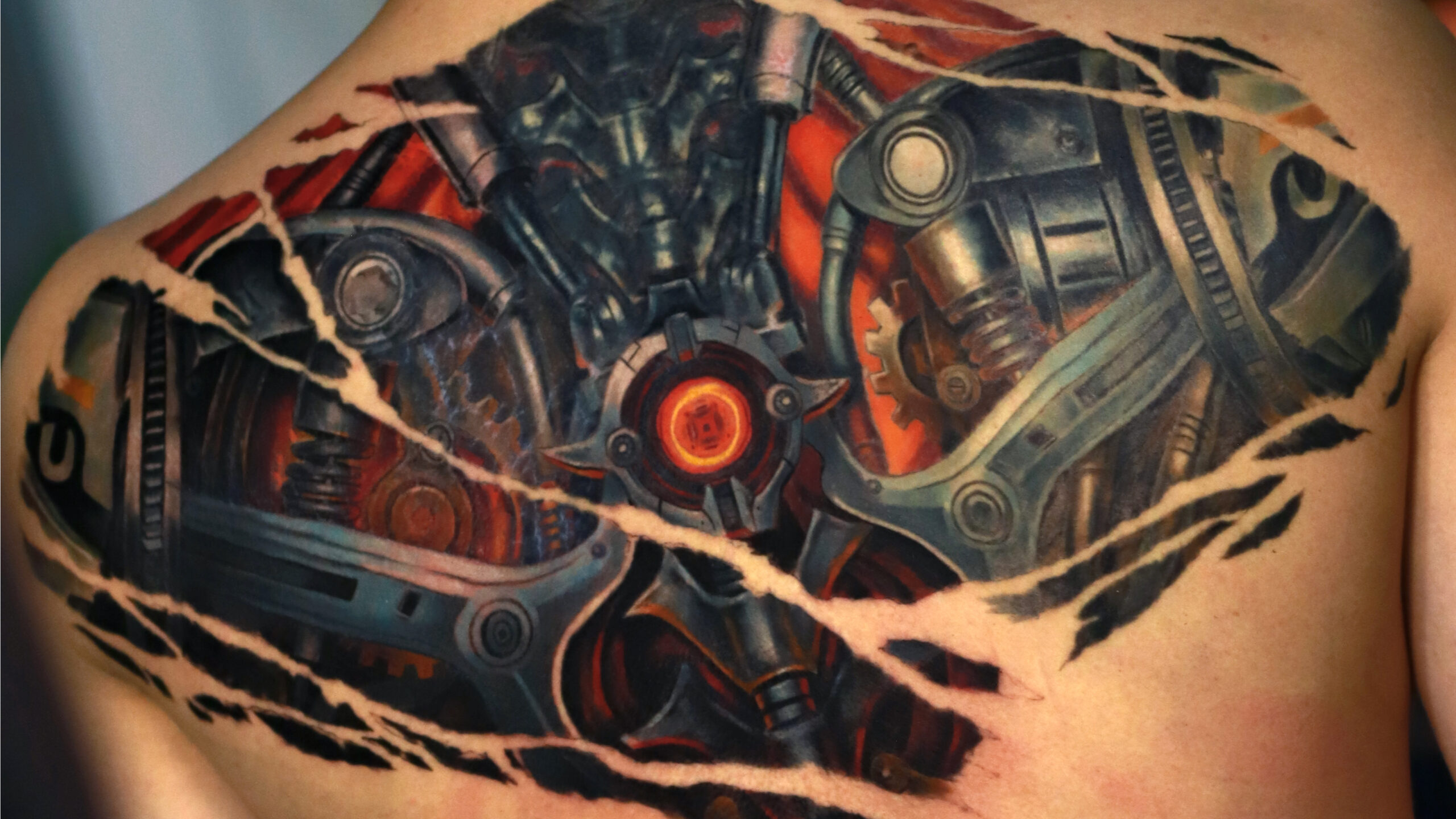
Large-Scale Tattoo
A large-scale tattoo is not simply a small design enlarged. The composition must work with anatomy, natural movement, and the way each area of the body is actually viewed.
The studio develops full sleeve, full leg, full back, and multi-session compositions with a clear hierarchy of primary and supporting imagery. This approach keeps the piece readable from a distance while preserving depth at close range.
Design Before Tattooing
A strong plan establishes the main focal point, level of detail, transition areas, and order of work from the beginning. This is especially important when a piece develops across multiple sessions or may expand in the future.
Lines and forms follow the muscles, joints, and natural direction of movement.
Primary imagery leads, while supporting elements reinforce rather than compete for attention.
Breathing room is intentionally preserved so the composition does not feel dense or heavy.
Transition areas are designed to keep the piece continuous around the body.
The composition accounts for its edges if the project needs to grow later.
Maintains a consistent language of tone, color, and detail across sessions.
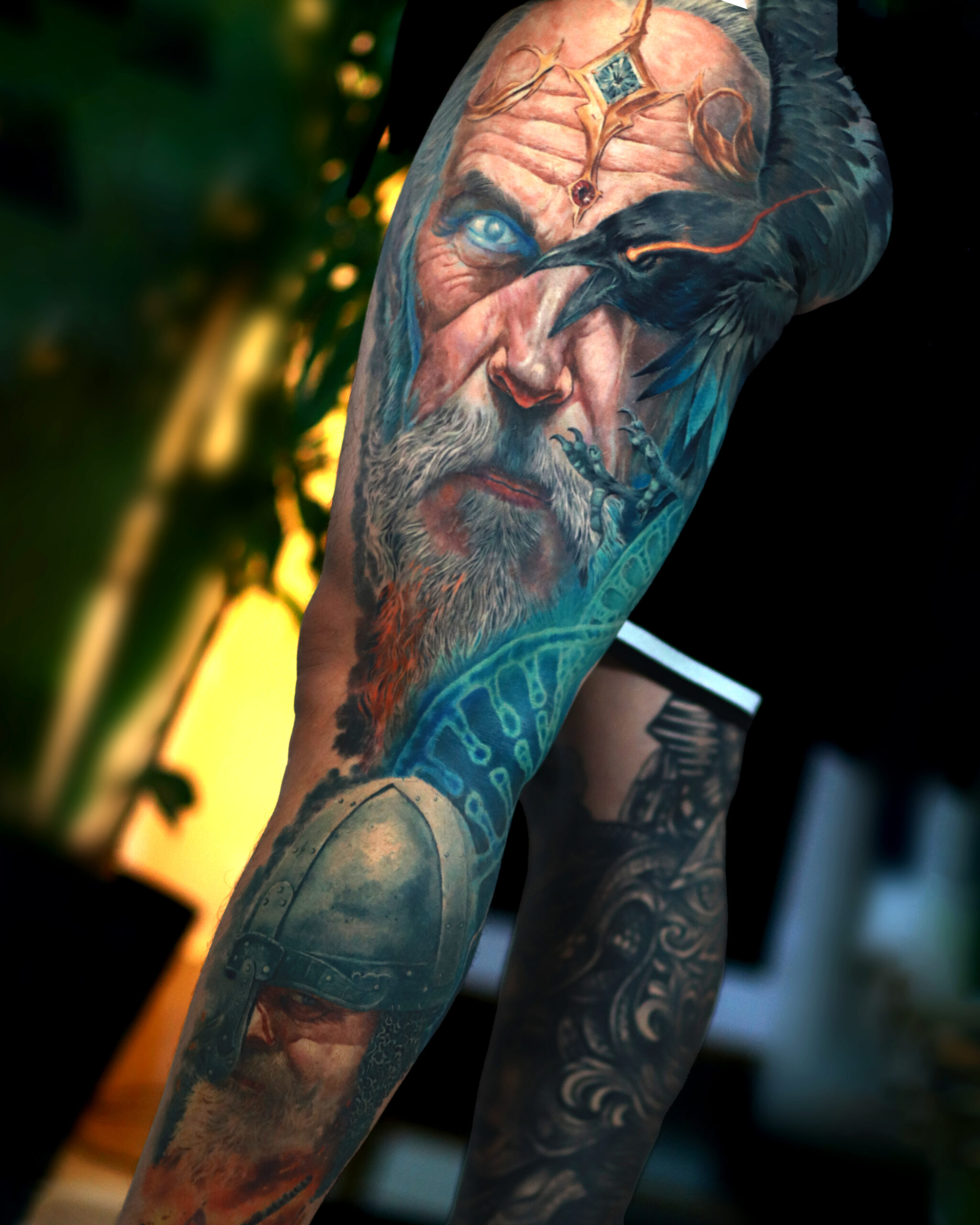
Full Leg Case Study
The composition develops across the full outer leg, connecting the warrior portrait, raven, and layered color into one continuous visual movement.
At this scale, the balance of focal points and transitions between subjects determines how clearly the piece reads while standing, walking, and viewed from different angles.
Full Arm · Fresh & Healed
Both images belong to the same full arm project, showing the contrast immediately after completion and its settled state at approximately one month. This is an observation point, not a promise that every person’s skin will heal in the same way.
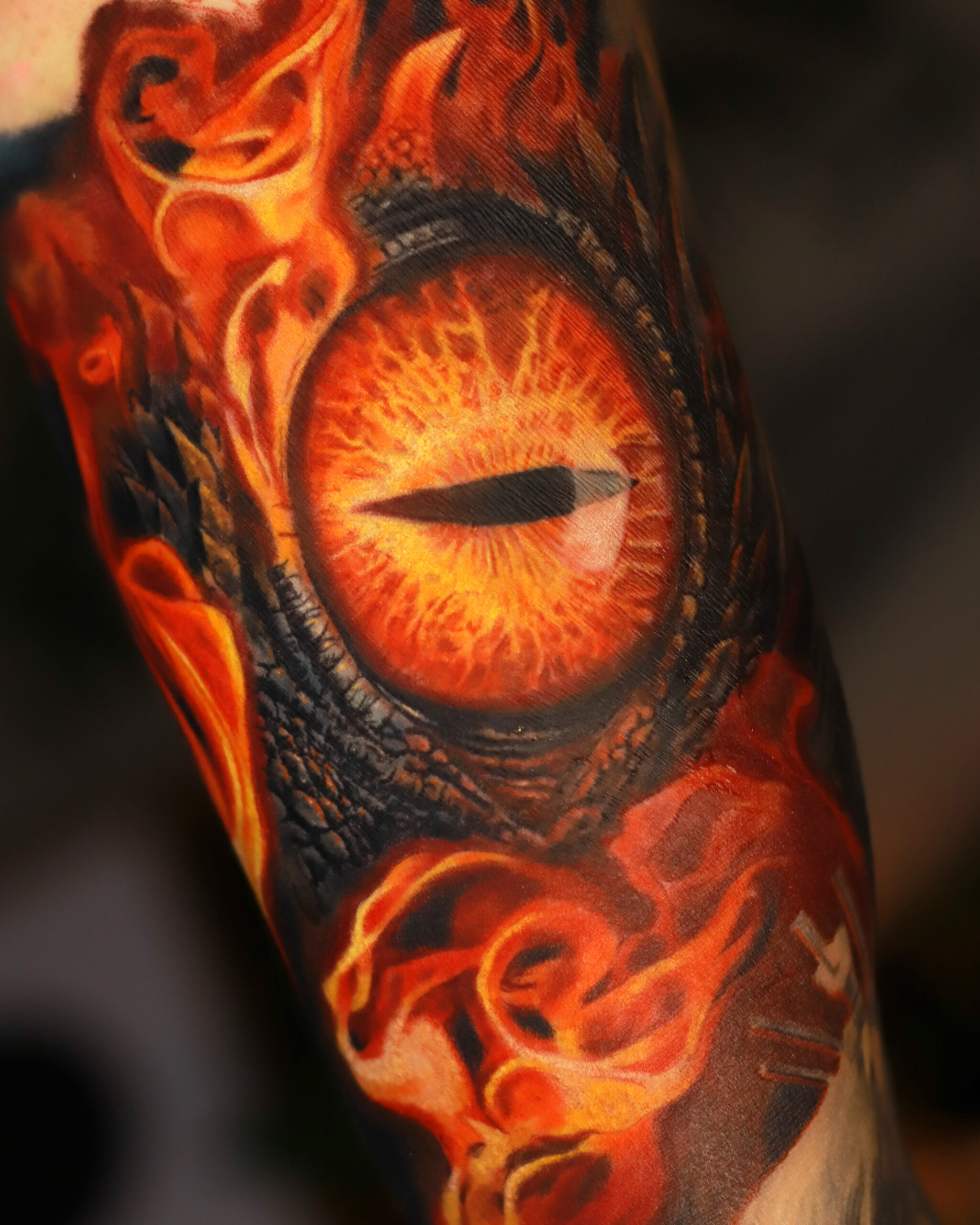
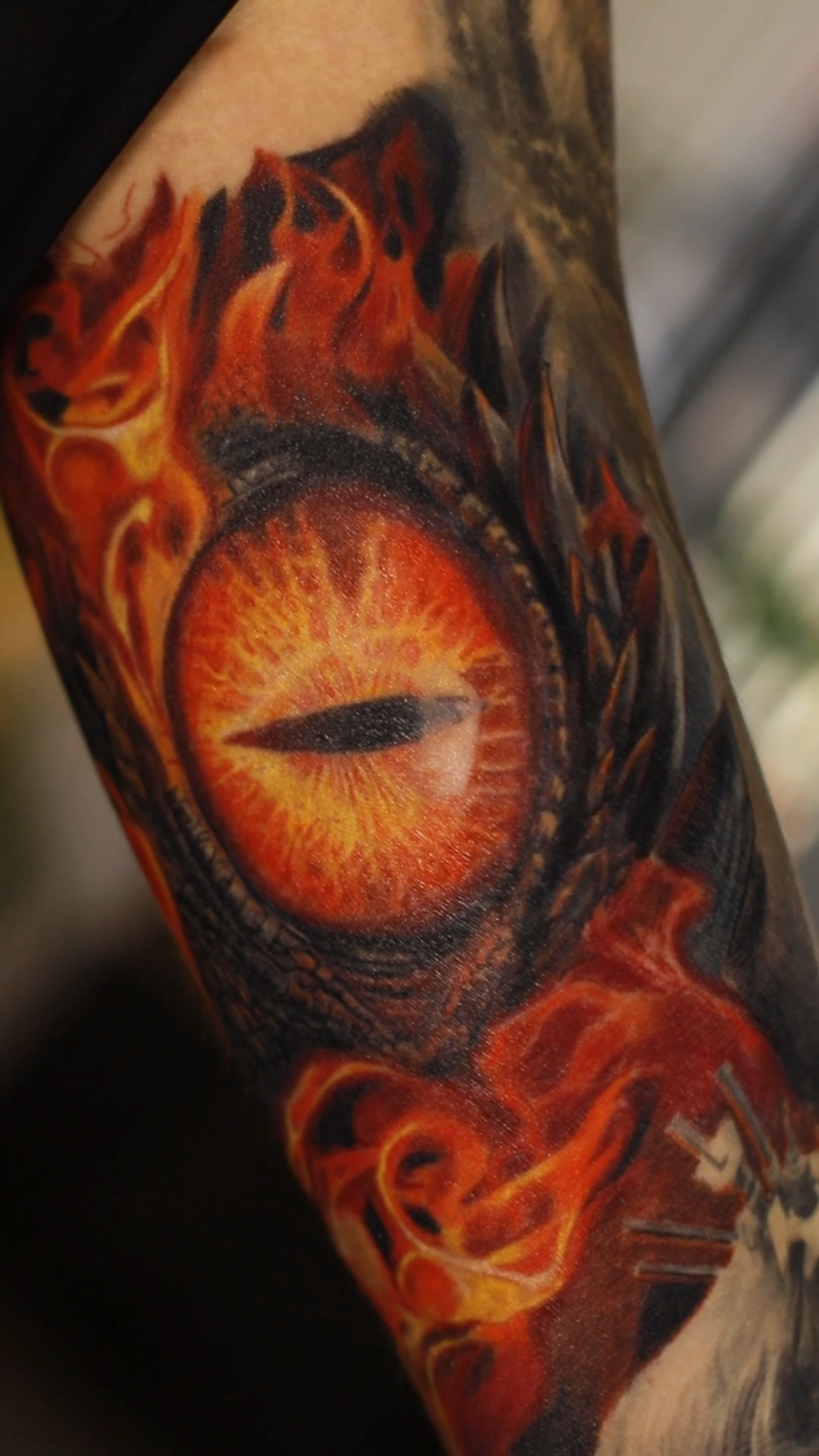
How color and tonal values settle after healing depends on individual skin, aftercare, placement, and other factors.
Supporting Projects
The woman portrait, skull, and fire are arranged in layered visual planes, creating movement along the arm while maintaining a clear focal point.
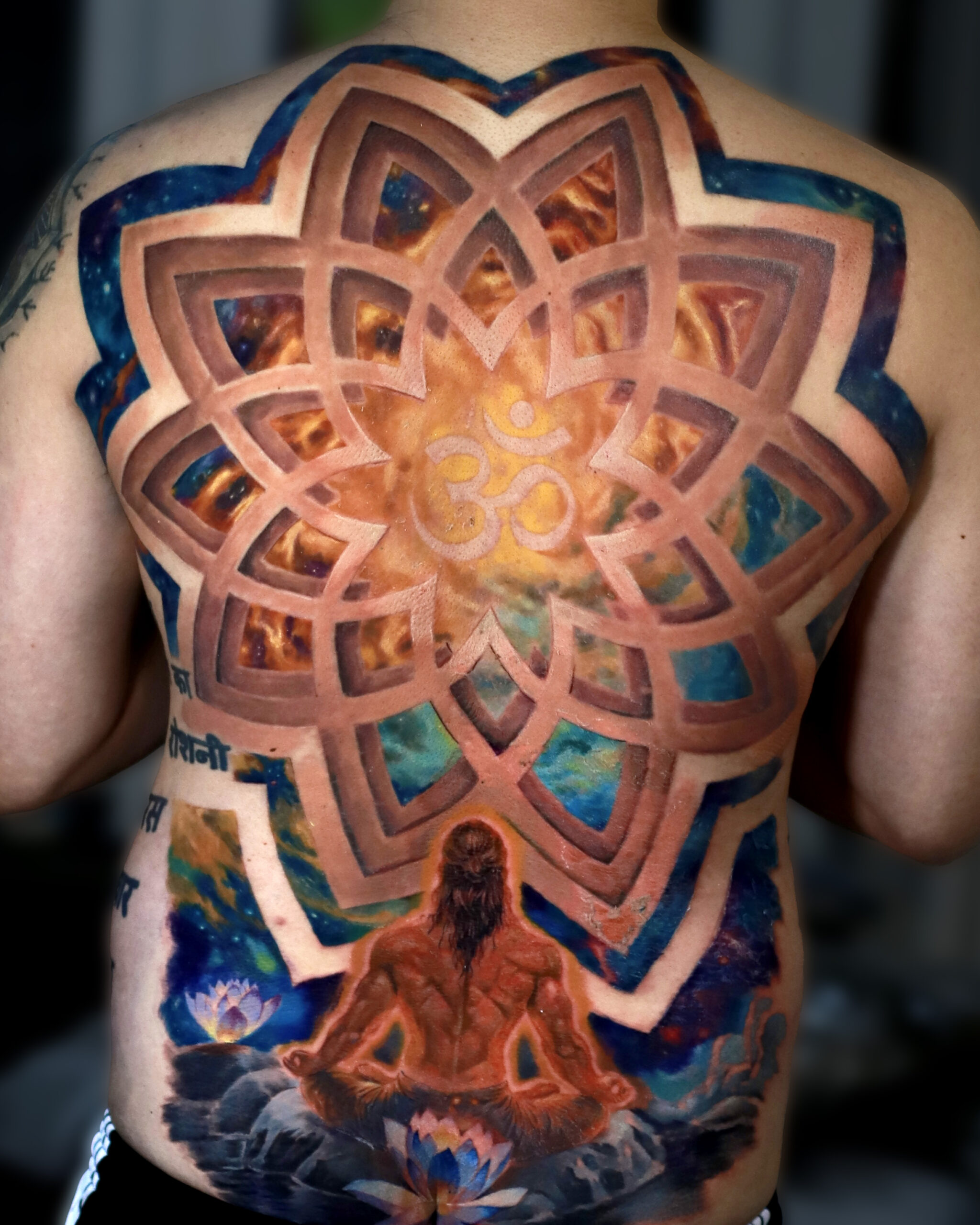
The full back provides space for a broad visual axis with a clear center, expanding decorative layers, and balance when viewed straight on.
Project Process
Share the subject, placement, scale, and reference images.
Review the proportions, movement, and any existing tattoos in the area.
Define the primary and supporting imagery, transitions, and negative space.
Set the session order according to the structure and healing needs.
Maintain consistent color, tone, and detail throughout.
Allow the skin to heal before continuing into the next areas.
The number of sessions varies with scale, detail, placement, Color or Black & Grey, complexity, pain tolerance, and each person’s healing rate.

Artist
Khang’s large-scale projects focus on Realism, flow across the body, and maintaining consistency throughout a multi-session process.
His portfolio offers a closer look at how he approaches portraits, color, Black & Grey, and large-scale compositions.
Prepare for Your Consultation
You do not need a finished design before reaching out. A few essential details help the studio understand the project’s scope and direction.
FAQ
There is no fixed number. The session count depends on coverage, detail, Color or Black & Grey, how the composition is staged, and each person’s healing rate. The studio can estimate the process after reviewing the placement and specific requirements.
A large-scale project should have an overall direction from the beginning. Individual sections can still be completed in stages, but proportions, focal points, and transitions need to be planned to avoid a disconnected composition.
In many cases, yes. The artist needs clear photos of the existing tattoo, its placement, tonal values, and the remaining skin to assess an appropriate connection or transition.
The two approaches organize contrast and visual rhythm differently. Color Realism requires a controlled color system throughout, while Black & Grey relies more on tone, depth, and open skin. The choice should reflect the subject, the body, and the intended aesthetic.
Prepare your main idea, reference images, preferred placement and scale, photos of the body area, and details about any existing tattoos. This information helps the consultation focus on the key decisions.
Start with a Strong Plan
Send your idea, placement, and reference images so Realism Tattoo Studio can advise on the composition, scale, and a suitable project roadmap.


