

KNOWLEDGE
Realism Portrait Tattoos: 7 Things You Need to Know
Reference quality, composition, size, technique, and healed results: the factors that determine a convincing realism portrait tattoo.
A realism portrait tattoo needs to do more than simply “look like the photo.” A strong piece also preserves expression, facial proportions, the relationship between light and shadow, and clear readability on a curved, moving body. Reference quality, size, placement, and the artist’s experience all directly affect the result.
What is a realism portrait tattoo?
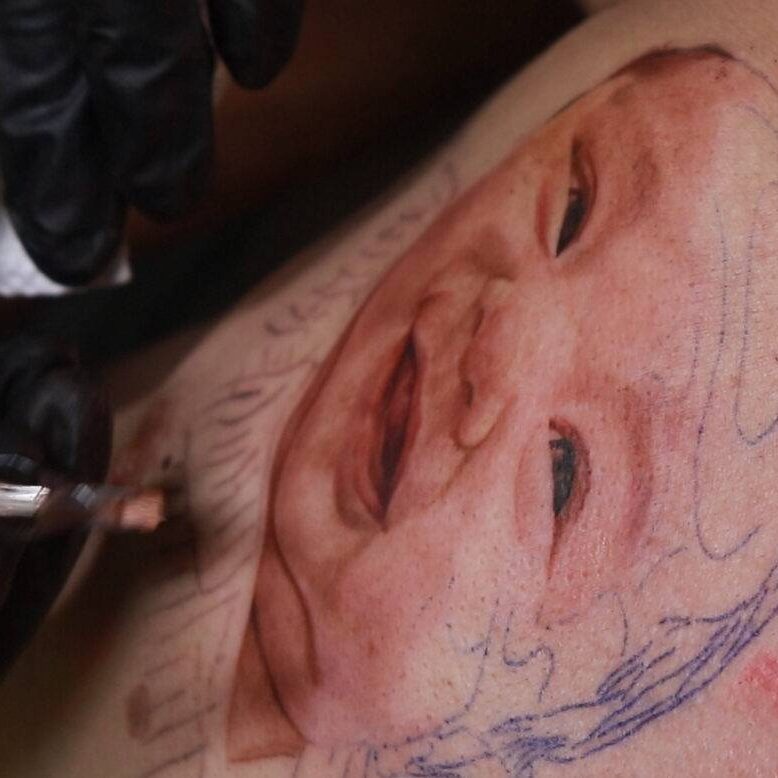
This style recreates a face—such as a loved one, public figure, artist, or pet—in ink, with proportions, lighting, texture, and expression close to the real subject. It can be executed in black and grey or in color.
Realism does not mean mechanically copying every pixel. The artist translates a flat image into a design that fits the body, selecting details so the portrait remains readable at a normal viewing distance and as it heals over time.
1. Reference quality determines the design potential
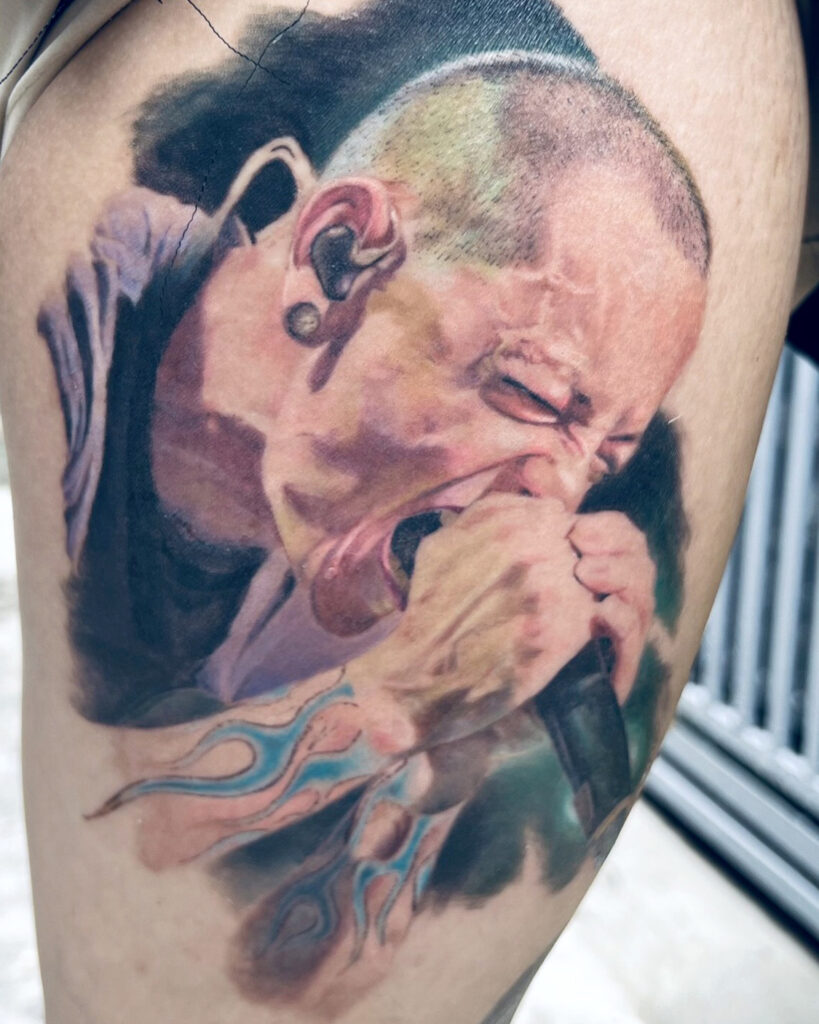
A suitable image is usually high resolution, with a face that is not blurred, lighting that clearly describes its structure, and no heavy filter that removes skin texture. A distant, overexposed, or obstructed face limits the information available to the artist.
If you only have an old or low-quality family photo, send the original file rather than a photo of a screen. The artist can assess what can be preserved, what needs to be simplified, and whether supporting references are necessary.
2. Likeness is more than facial outlines
We recognize a face through many combined cues: spacing between the eyes, the shape of the nose and mouth, head angle, jawline, hair, lighting, and especially expression.
A tattoo can therefore contain many details without producing a convincing likeness. Correct proportions, clear value structure, and deliberate focal points are often more important than forcing every small detail into insufficient space.
3. Size should match the required level of detail
A detailed portrait needs enough area for gradients, soft edges, and negative space. When a design is reduced too far, the eyes, nose, lips, or hair can become too crowded to remain separated over time.
Instead of starting with a fixed size, discuss three factors together: the placement, the reference image, and the desired level of detail. The artist can then recommend proportions that fit the body and the composition.
4. Body placement changes how the portrait reads
The shoulder, upper arm, forearm, thigh, calf, chest, and back all have different forms. A composition that looks good on a flat screen can distort if it is not adjusted for curvature and movement.
The subject’s gaze, the space around the head, and connections to existing tattoos also need to be planned. This is why viewing a mock-up on a clear photograph of the actual placement is valuable before tattooing.
5. Should you choose black and grey or color?
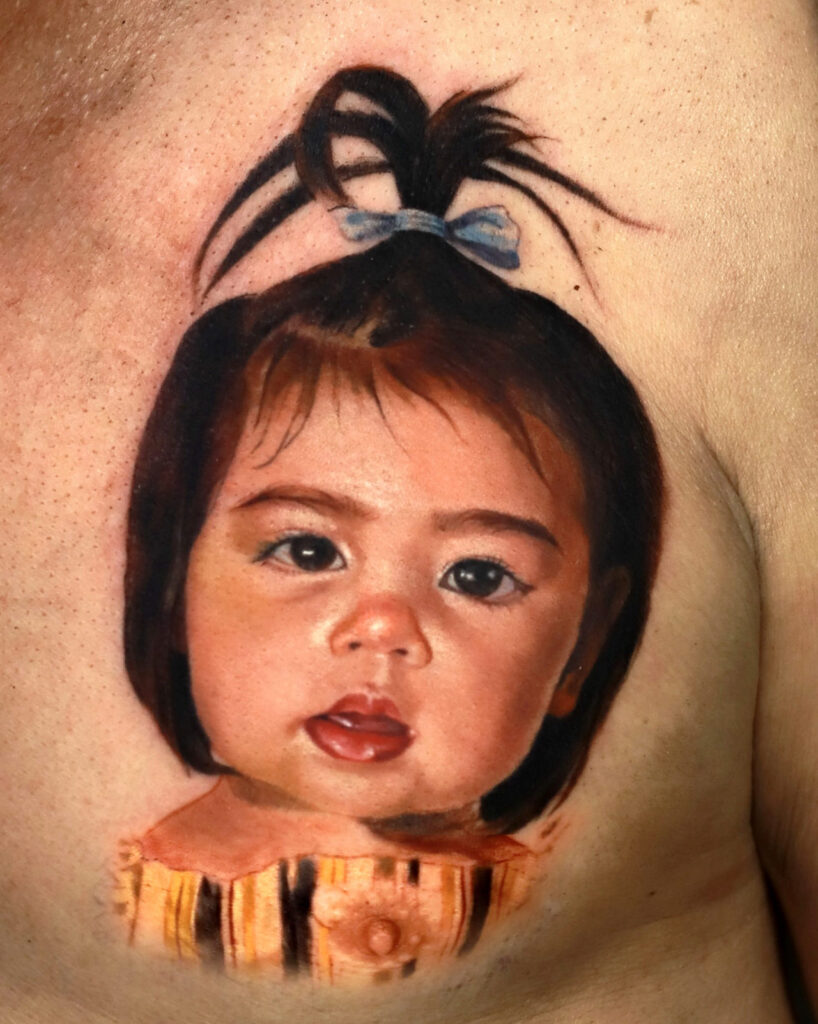
Black and grey emphasizes contrast, values, and light structure. Color can reproduce more information from skin, eyes, clothing, or background, but the palette must suit both the reference and the client’s skin tone.
Neither is automatically better. The decision should reflect the emotion you want, the artist’s healed portfolio, the placement, and the design’s ability to maintain contrast.
6. How to evaluate a realism portrait artist
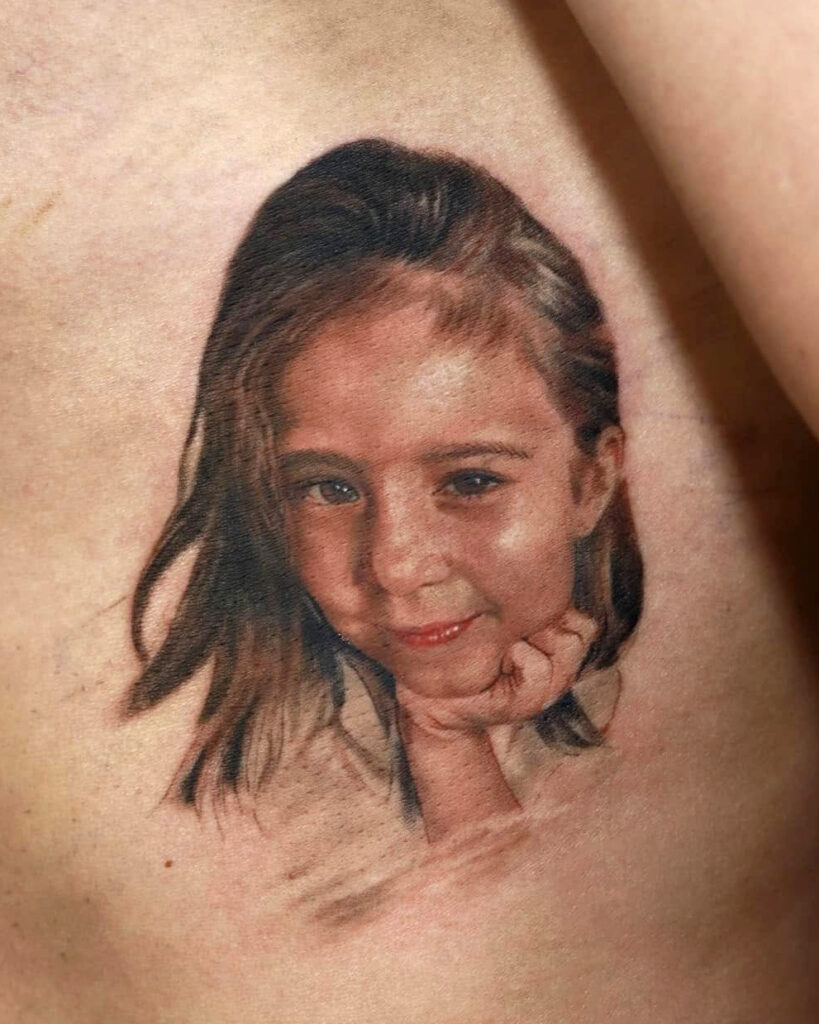
Do not look only at freshly finished close-ups. When possible, review healed work and wider images of the body placement. A useful portfolio should demonstrate:
- Consistent facial proportions.
- Clear separation of highlights, midtones, and shadows.
- Clean gradients that preserve facial structure.
- Designs adapted to the body placement.
- Healed work that remains readable.
Ask which pieces were made by the artist and when each photo was taken. You can compare the studio’s work in the Realism Tattoo Gallery and on Khang Truong’s artist page.
7. Common mistakes when planning a portrait project
- Choosing a blurred reference or one altered by heavy filters.
- Reducing the design while expecting every detail to remain.
- Reviewing only fresh close-ups without seeing body composition or healed results.
- Combining too many portraits and background elements without a clear focal point.
- Choosing an artist only by price instead of a relevant portfolio.
Where should the consultation begin?
Prepare the original reference, a clear photo of the placement, an approximate size, and examples of the visual feeling you want. For a memorial portrait, identify what must be most recognizable—for example, the eyes, smile, a personal object, or a date.
From this information, the artist can assess feasibility, propose a composition, and discuss the number of sessions. At Realism Tattoo Studio, design is provided at no additional charge after the client has paid a deposit to begin the design process and reserve the appointment. The final design should be reviewed in relation to the body, not only as an isolated screen image.
Frequently asked questions
Can a phone photo be used for a portrait design?
Yes, if it is sufficiently clear and has not been heavily compressed or blurred. Send the original file and, when available, other photographs of the same person.
Can several people be combined in one tattoo?
Yes, but the design needs enough space and a clear visual hierarchy. Before designing, the artist should establish the primary face, directions of gaze, and detail level for each subject.
When should the final result be evaluated?
A fresh photo shows the initial composition and technique, while a healed photo provides more information about the stability of values and details. Healing time varies; follow the new tattoo aftercare guide and contact a health professional if you notice abnormal symptoms.
Conclusion
A convincing realism portrait combines a suitable reference, body-aware design, enough size for detail, and an artist with a relevant portfolio. Careful preparation during consultation reduces mismatched expectations and creates a stronger foundation for a meaningful, long-lasting piece.
Planning a portrait project? Send the reference and a clear photo of the placement so the studio can assess feasibility, size, and composition.
REALISM TATTOO STUDIO


