TATTOO COVER-UP

Tattoo Cover-Up in Ho Chi Minh City

A successful cover-up is not simply a darker tattoo placed over old ink.

It begins with a careful assessment of the existing tattoo—its size, placement, contrast, color, available surrounding skin and relationship with the body.

From there, a new design direction can be developed with enough structure, flow and visual hierarchy to work as a complete tattoo.

SEND YOUR TATTOO FOR ASSESSMENT
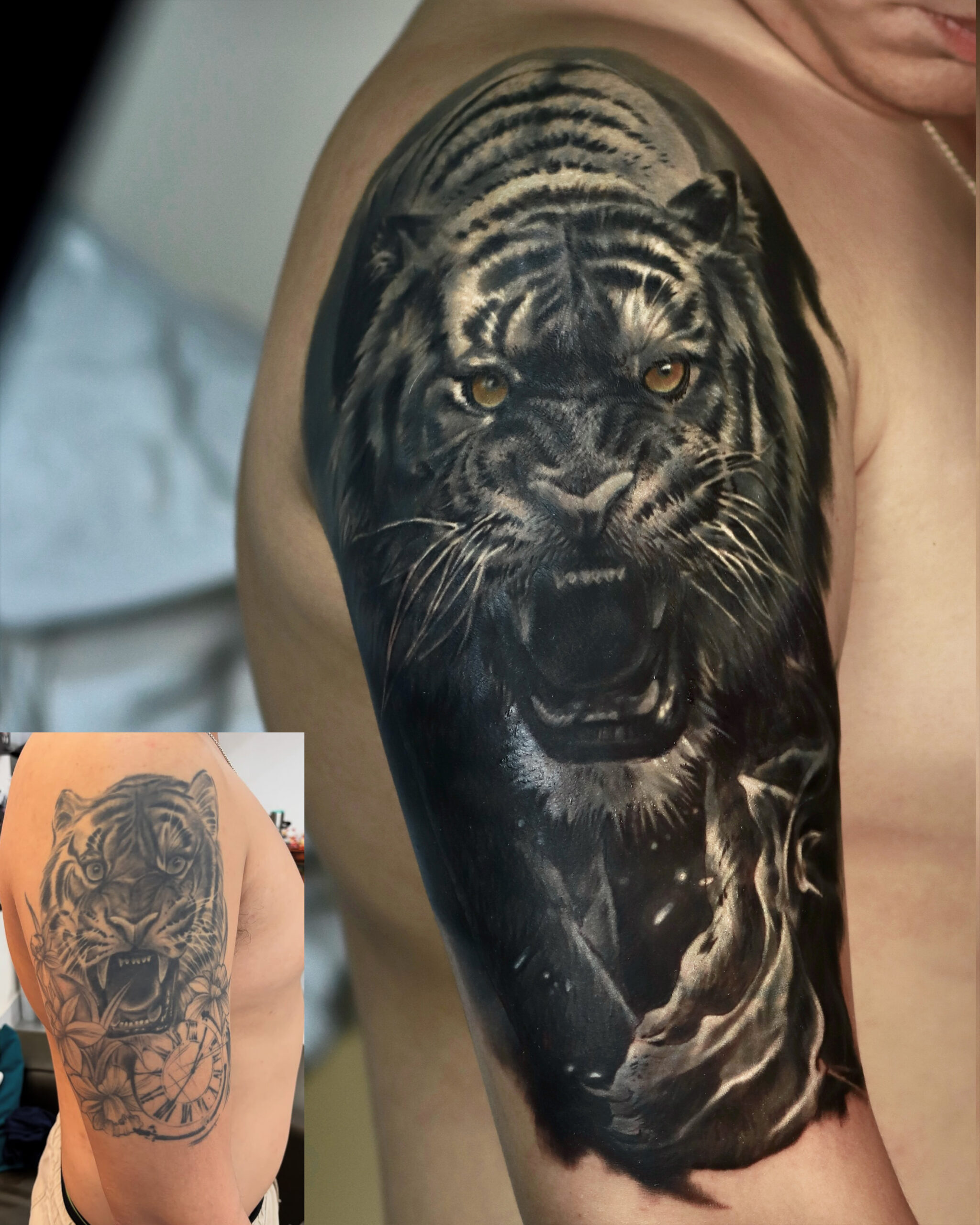
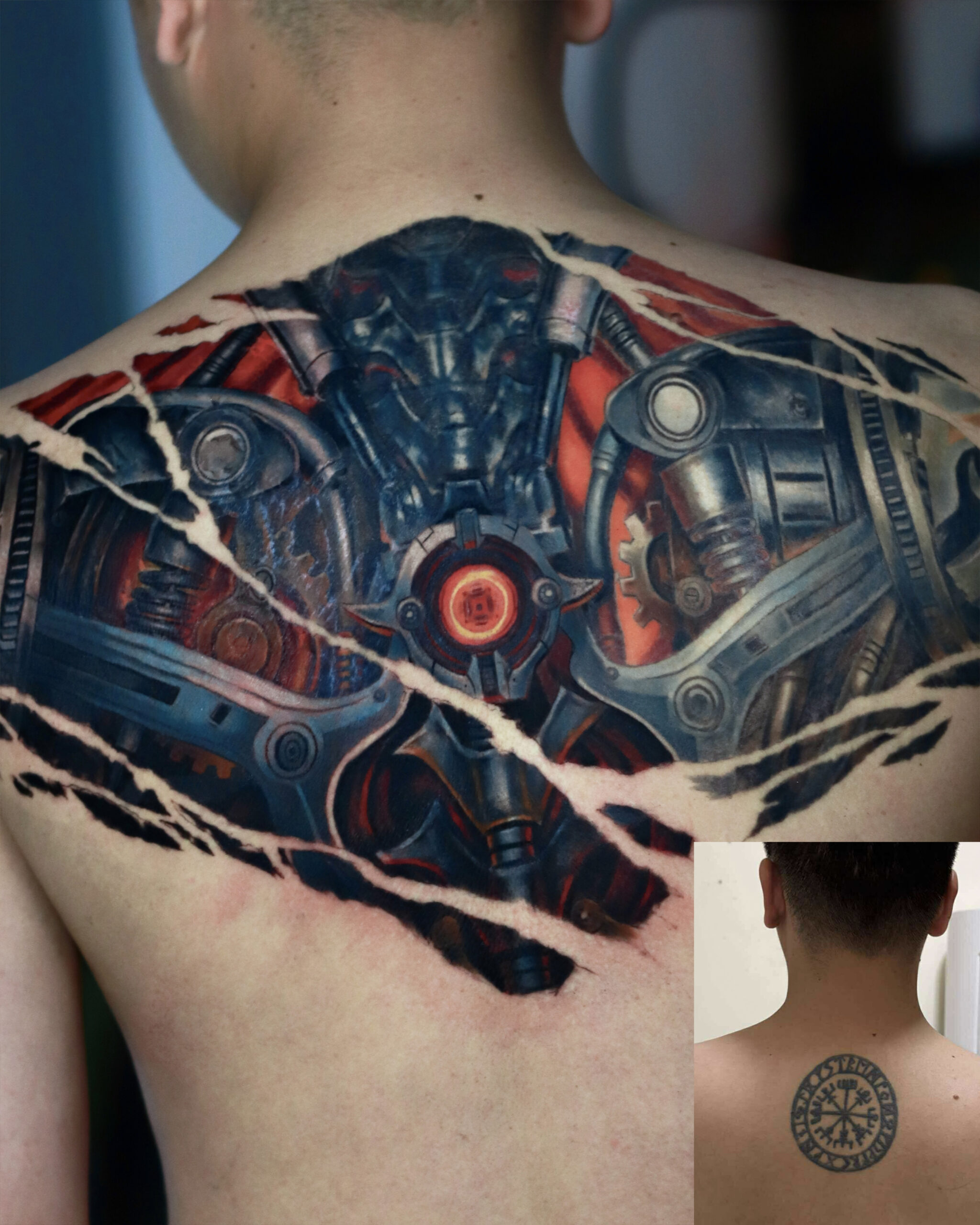
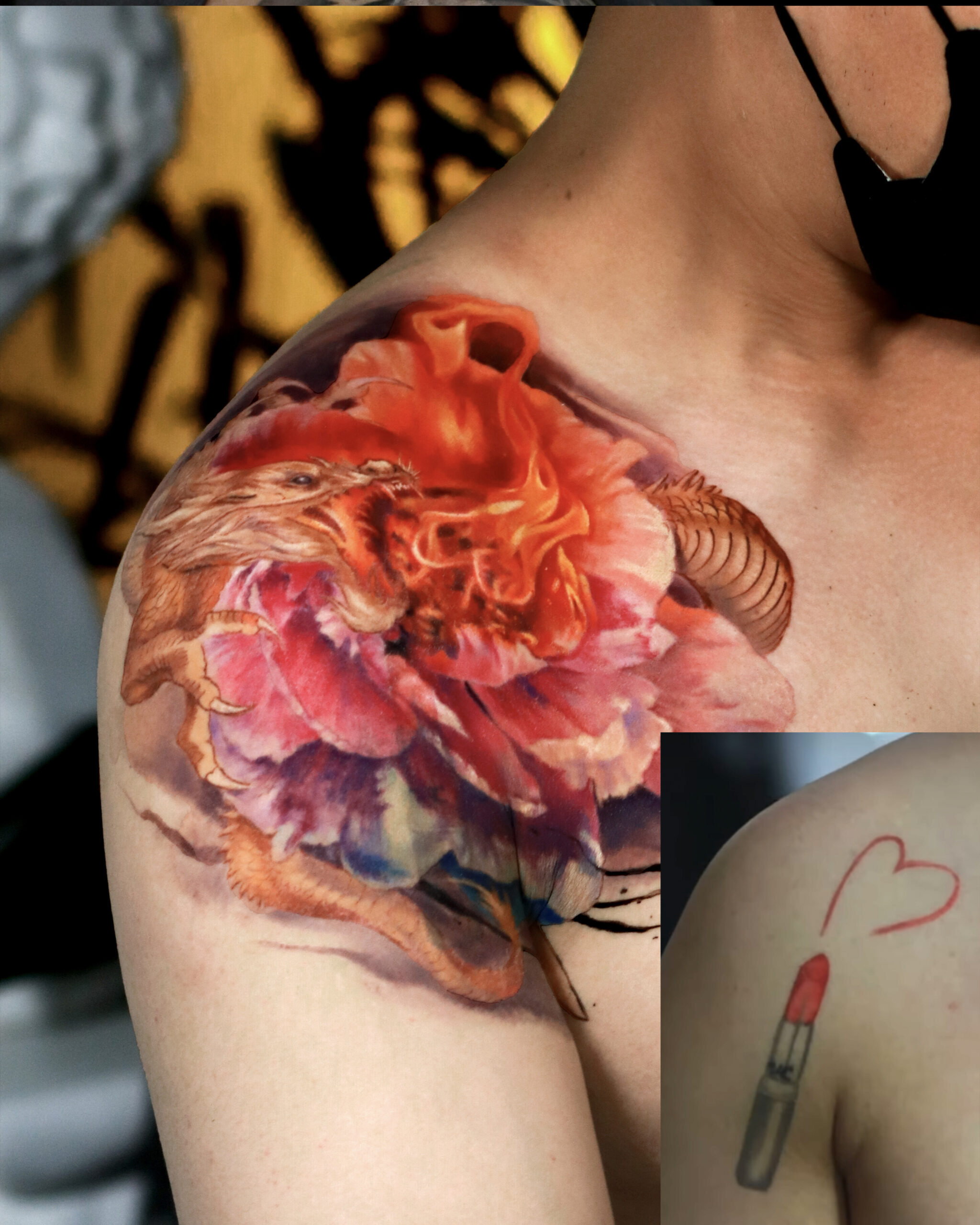
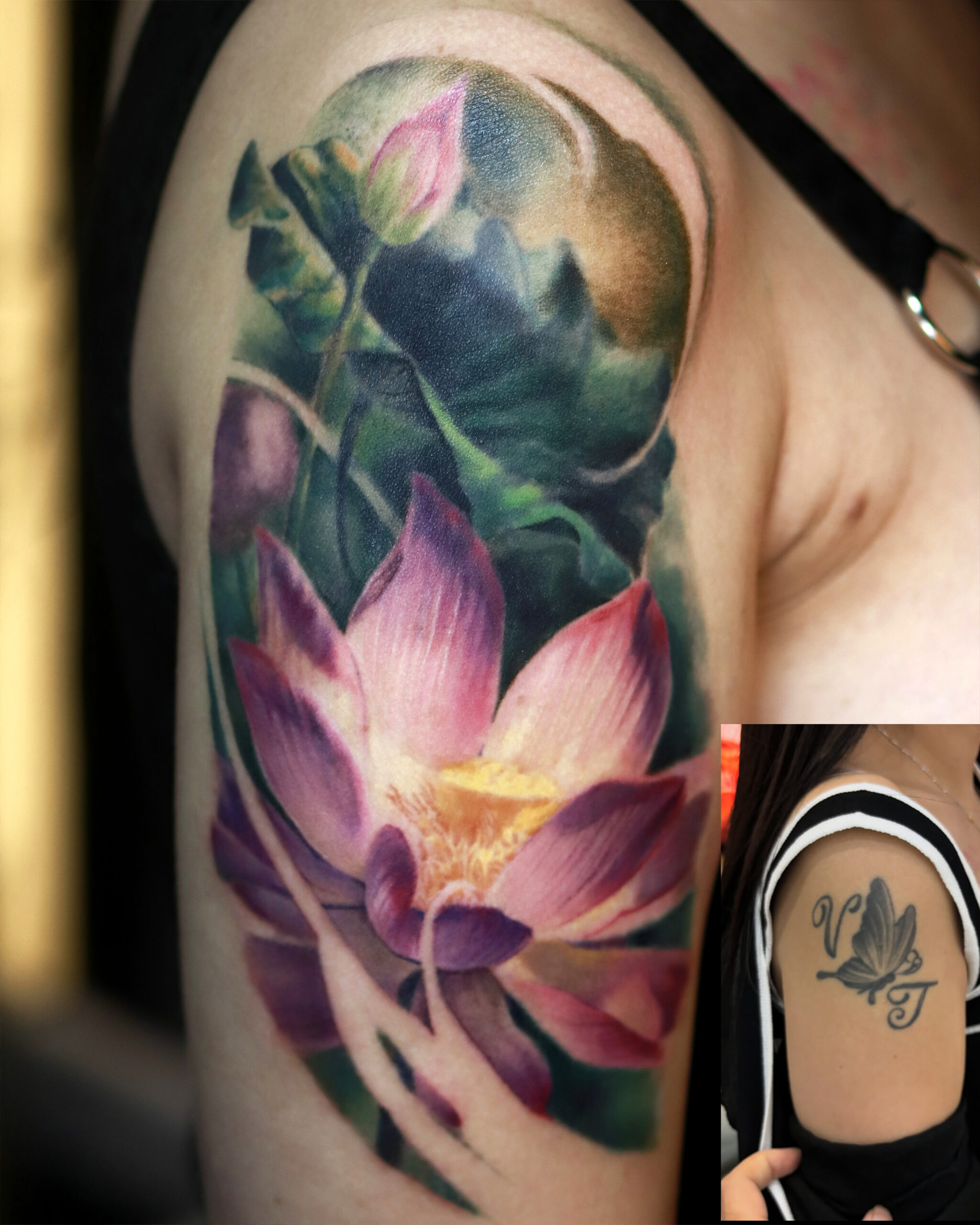
Tattoo cover-up project in Ho Chi Minh CityColor tattoo cover-up project in Ho Chi Minh City
COVER-UP PLANNING

A Good Cover-Up Starts With Understanding the Existing Tattoo

The first step is to evaluate what is already on the skin. Different tattoos require different design solutions, and the existing structure influences how much freedom the new composition can have.

Before planning begins, the artist considers the scale, placement, dark and light areas, existing color, detail density, skin condition, surrounding space and the subject or direction the client would like to explore.

  • scale and placement
  • dark and light areas
  • existing color
  • detail density
  • skin condition
  • surrounding clean skin
  • body flow
  • preferred design direction

The aim is not only to make the old tattoo less visible, but to build a new focal point and a composition that reads clearly on the body.

FEASIBILITY

Can Every Old Tattoo Be Covered?

Not every tattoo has the same cover-up potential. A lighter tattoo with open areas usually allows more options than a dense piece with large areas of dark ink.

Depending on the existing tattoo, the new design may need:

  • a larger composition
  • stronger contrast
  • strategically placed darker areas
  • a new focal point
  • use of surrounding clean skin
  • multiple sessions
Feasibility should be assessed from clear photos of the full tattoo and its body placement before a design direction is planned. Complete concealment cannot be promised in every case.
FROM OLD TATTOO TO NEW COMPOSITION

How a Cover-Up Project Is Developed

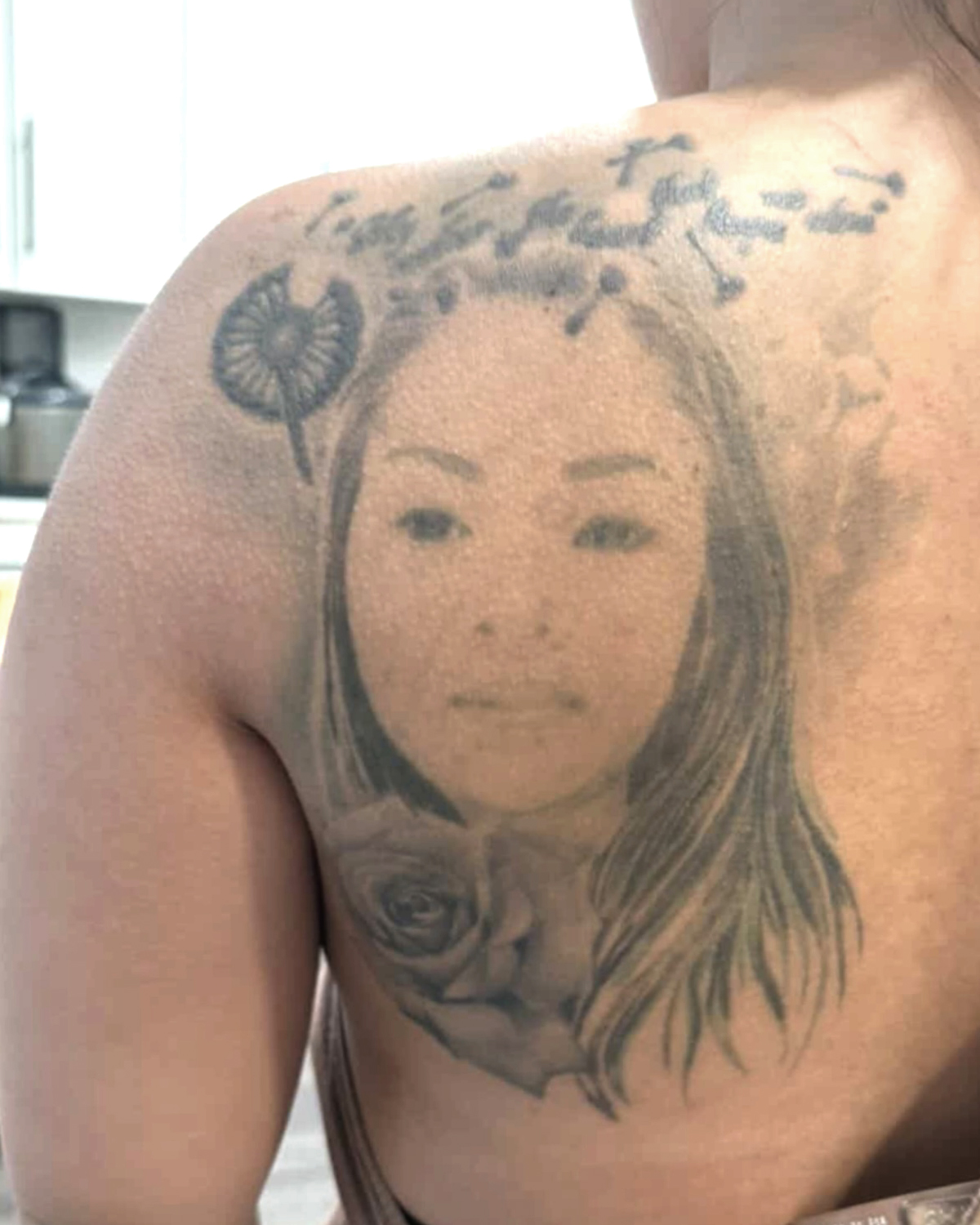
Old tattoo before cover-up
01 — ASSESSMENT

Assessing the Existing Tattoo

The artist evaluates the tattoo’s size, placement, density, contrast and relationship with the anatomy. This identifies what may be integrated, what needs stronger coverage and how far the new composition may need to extend.

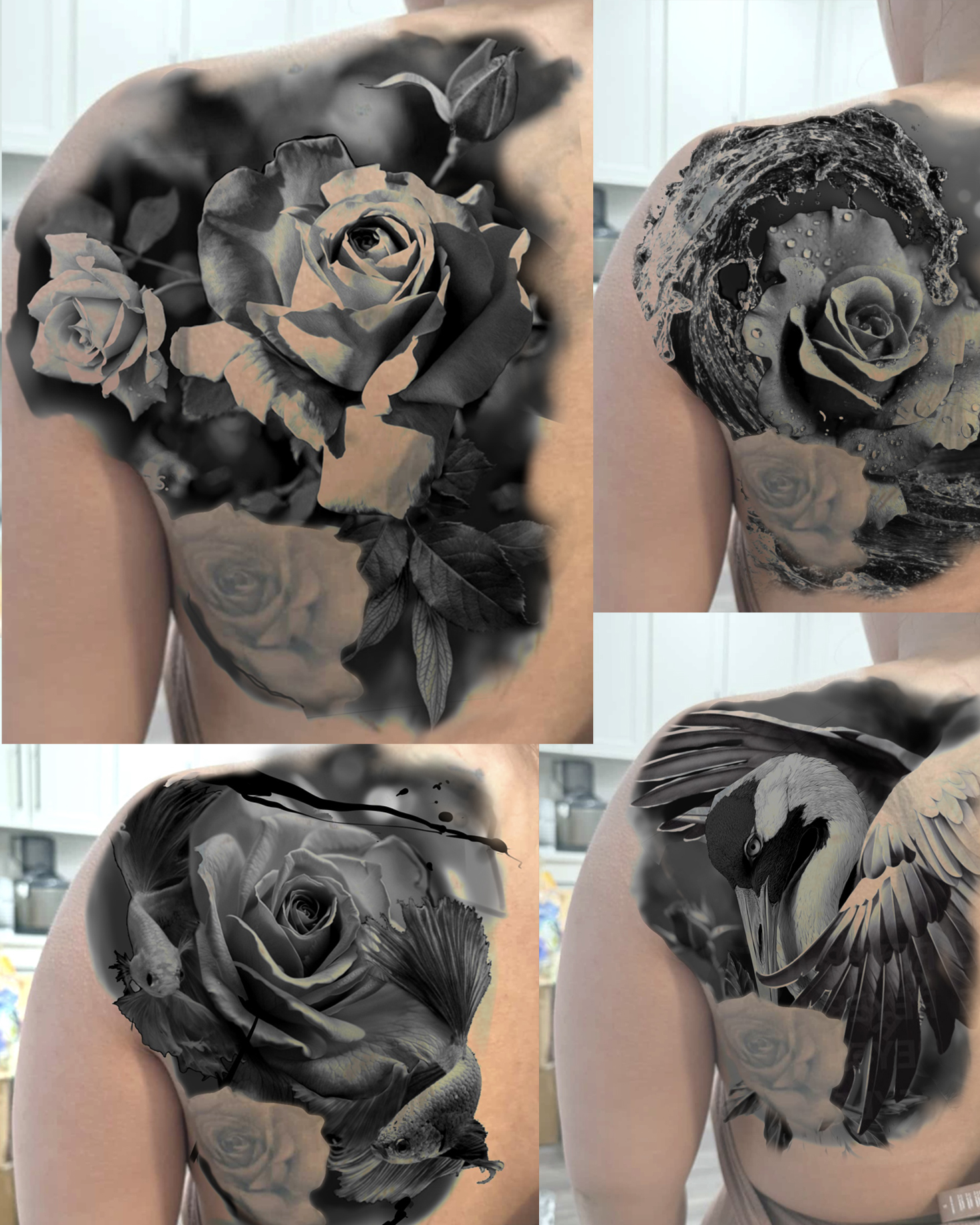
Cover-up design exploration
02 — DESIGN OPTIONS

Exploring Design Directions

Different compositions may be tested to determine which direction works best with the existing tattoo while creating a clear new focal point and balanced body flow.

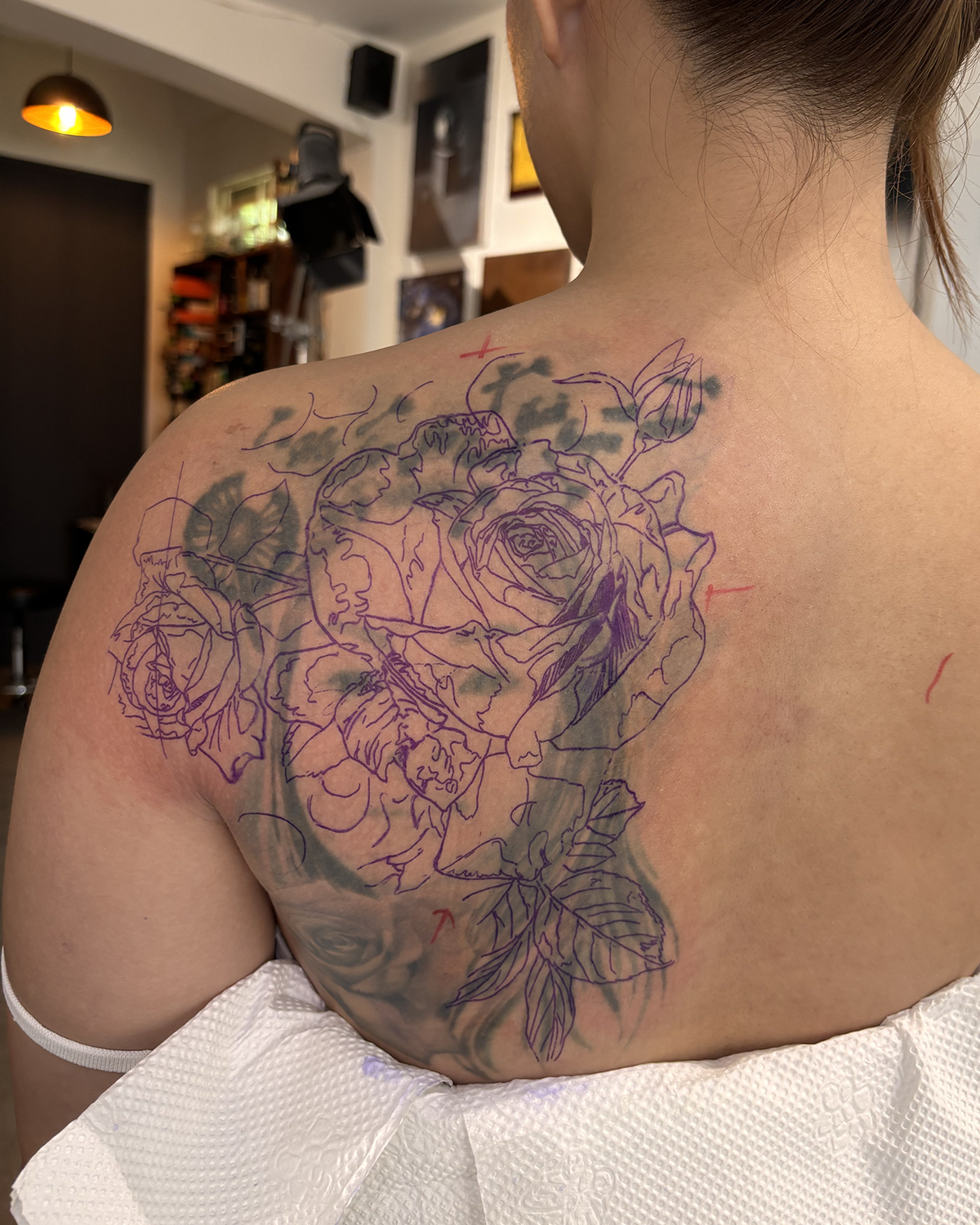
Tattoo cover-up body mapping
03 — BODY MAPPING

Mapping the Design to the Body

The new design is positioned around the anatomy and the structure of the existing ink. Light, dark, open space and areas requiring stronger coverage are balanced on the body.

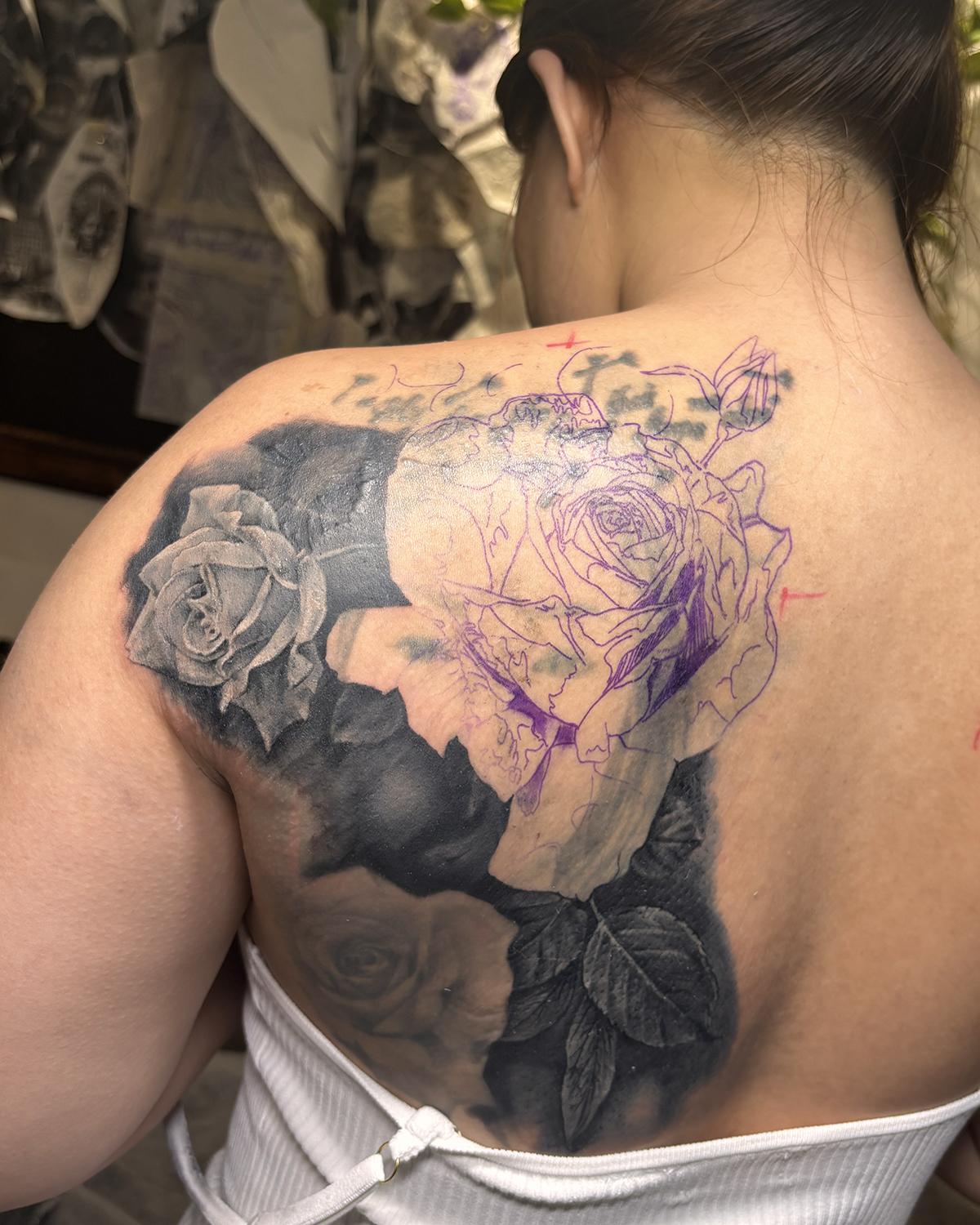
Tattoo cover-up in progress
04 — DEVELOPMENT

Building the New Composition in Stages

Larger or more complex cover-up work may be developed progressively. The order of work follows the composition, project scope and how each area of skin responds.

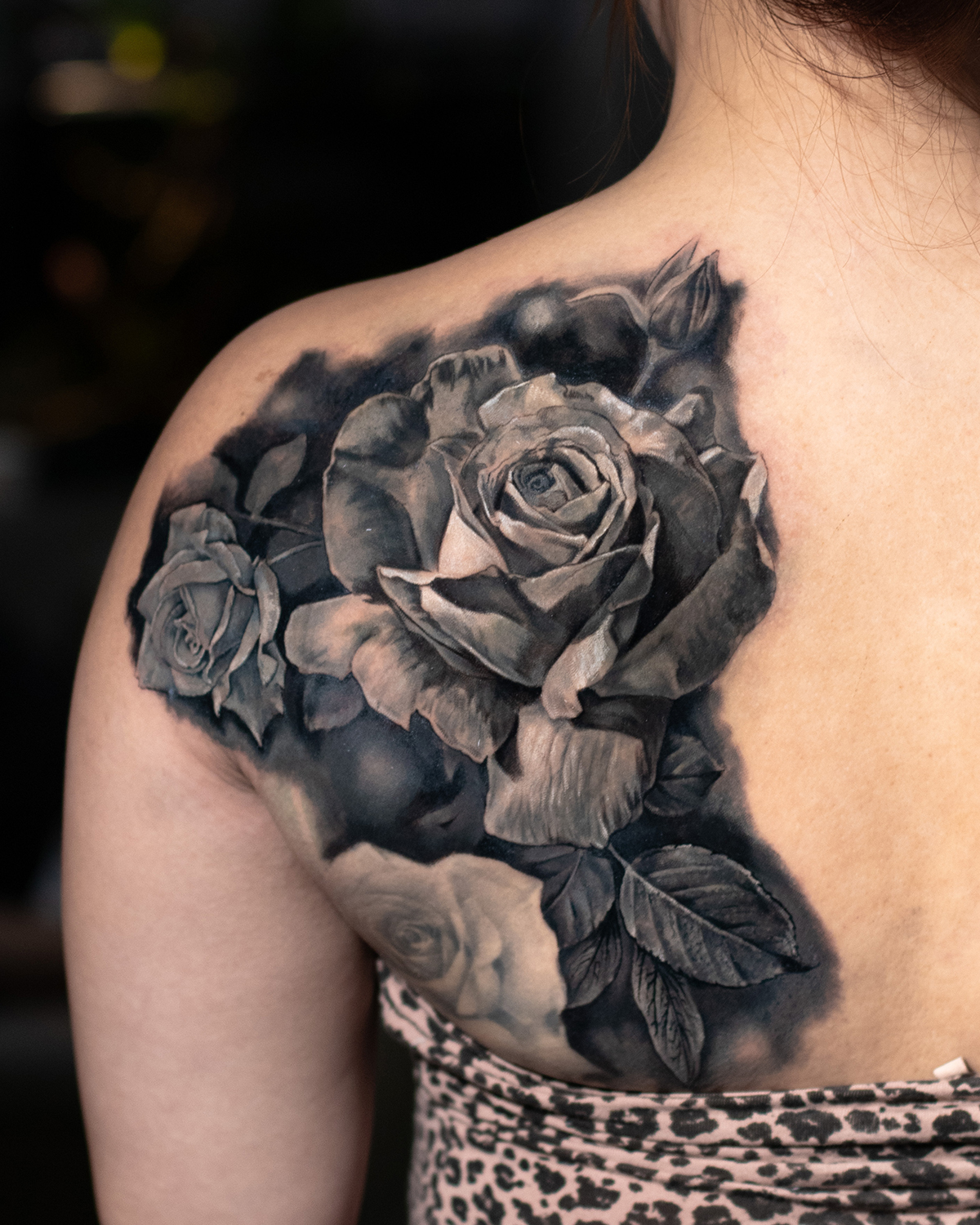
Completed tattoo cover-up
05 — COMPLETION

Completing the New Composition

The completed result should read as a cohesive new tattoo, with a clear focal point, controlled contrast and movement that leads the eye through the new design.

DESIGN FACTORS

What Determines the Direction of a Cover-Up?

01

Darkness of the Existing Tattoo

Dense or dark ink directly affects contrast and the range of workable design choices.

02

Size and Placement

The new design is planned around the whole body area, not only the outline of the old tattoo.

03

Existing Color and Contrast

Color and value must be controlled so the new composition remains readable.

04

New Composition

A stronger focal point and new movement can redirect attention through the finished tattoo.

05

Project Scope and Sessions

Scope depends on area, existing ink density, placement, detail and design complexity.

Read more about what determines tattoo pricing and project scope.

SELECTED WORK

Selected Tattoo Cover-Up Projects

Large-scale color tattoo cover-up

Large-Scale Cover-Up

A new composition can extend beyond the old tattoo to rebuild the visual structure across a larger body area.

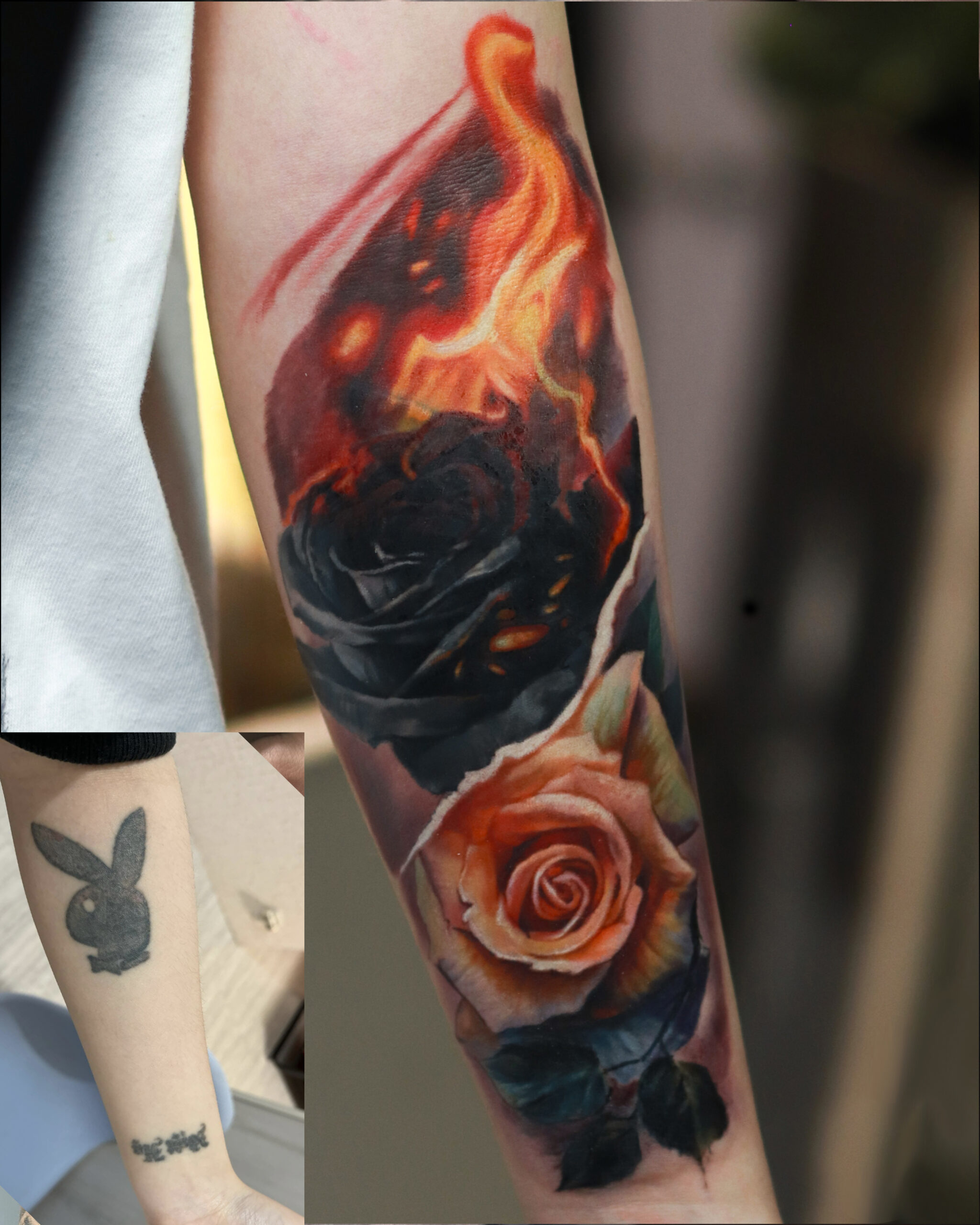
Color cover-up tattoo with a new composition

Color Cover-Up With a New Composition

A color cover-up developed around a new composition, using contrast, color placement and focal hierarchy to integrate the existing tattoo into the new design.

Tattoo cover-up designed around body anatomy

Cover-Up Built Around Anatomy

Placement and anatomy can determine how the new tattoo extends, connects and covers the existing work.

CONSULTATION PROCESS

How the Cover-Up Consultation Works

01

Send Photos

Provide clear photos of the full tattoo and the surrounding body area.

02

Initial Assessment

The artist reviews density, placement, contrast and areas that may be integrated or covered.

03

Discuss Direction

Explore subject, style, color and the practical scope of the new design.

04

Plan Around the Body

Develop the composition in relation to anatomy and the existing tattoo.

05

Review Scope and Sessions

Possible staging is discussed only after the project has been properly assessed.

06

Tattoo and Review

The work is completed and reviewed in stages as needed for the project.

Khang Truong tattoo artist
ARTIST

Khang Truong

Cover-up work requires careful control of composition, body flow and visual hierarchy. The existing tattoo must be managed as part of the design process rather than treated as an isolated shape to hide.

Khang Truong’s approach focuses on building a new design that works as a complete tattoo, with purposeful focal structure, contrast and movement across the body.

His portfolio includes realism tattoo work and compositions developed around the anatomy.

VIEW KHANG TRUONG’S PORTFOLIO
START WITH AN ASSESSMENT

Send Your Existing Tattoo for Assessment

To help the studio understand your project, please send:

  • a clear photo of the full tattoo
  • a wider photo showing body placement
  • the approximate size
  • your preferred subject or concept
  • Color or Black & Grey preference, if any
  • your preferred timing
You do not need to determine the final size or number of sessions before consultation. International clients may send photos before arriving in Ho Chi Minh City so the project can be assessed in advance.
SEND YOUR COVER-UP PROJECT
FAQ

Tattoo Cover-Up Questions

Can an old tattoo be completely covered?

Feasibility depends on the darkness, size, color, placement and structure of the existing tattoo, as well as the intended new design. Clear photos are needed before the studio can assess the practical level of coverage.

Does a cover-up tattoo need to be larger?

It often requires additional space to create a stronger composition and smoother transitions, but the necessary size depends on the individual tattoo.

Does a cover-up have to be very dark?

Not necessarily. Effective cover-up work depends on contrast, composition, color and placement—not simply making every area darker.

How many sessions does a cover-up take?

The number of sessions depends on project size, complexity, placement and the density of the existing tattoo. A fixed number should not be promised before assessment.

Do I need to visit the studio before planning?

An initial assessment can begin from clear photos. Final decisions about layout and body mapping may require an in-person evaluation before tattooing.

Can part of the original tattoo be kept?

In some cases, selected elements can be integrated into the new composition if their quality, placement and structure support the new design direction.

START YOUR COVER-UP PROJECT

An Old Tattoo Does Not Have to Define the Final Result

A stronger result begins with an honest assessment, thoughtful planning and a new composition built around both the existing tattoo and the body.

Send clear photos of your tattoo to discuss a practical design direction with Realism Tattoo Studio.

SEND YOUR EXISTING TATTOO